
Find Who Owns a Wythe County Parcel
The county assessment card is the fastest starting point. It typically shows a likely owner name and the parcel number. For confirmation, check the latest transfer in the Circuit Court Clerk's recorded deed index. The map connects these property records, showing the parcel, its road context, and related taxable IDs, while the deed itself carries the conveyance and the legal description.
- Search the address or road in InteractiveGIS and open the likely land card.
- Copy the CURRENT OWNER field, tax map, mailing line, and road frontage.
- Search the current owner as grantee in the newest deed index entries.
- Compare the deed’s grantor, legal description, and map reference with the card.
- If an LLC appears, check its public filing name through Virginia SCC.
The card gives a quick first answer. Recent purchases need more. When a sale just closed or an estate transfer is involved, the newest recorded deed is the better confirmation of the owner of record.
Wythe County Owner-Record Sources
Three local sources carry the owner trail. InteractiveGIS and the Commissioner's land card show the assessment owner. The Clerk's deed index locates a recorded deed and names its grantor and grantee. The county GIS map ties those names to a tax map and nearby land. Each record serves a different purpose. Each carries its own date. For that reason, Wythe County property records rarely update all three at once.
| Source | Owner information | How to use it |
|---|---|---|
| InteractiveGIS land card | CURRENT OWNER, mailing line, map, history | Find the likely parcel and tax-roll name |
| Circuit Clerk deed index | Grantee and grantor on recorded transfers | Check the legal conveyance |
| County GIS map | Parcel location and related map IDs | Connect an address to land |
| Virginia SCC CIS | Public entity name and registered agent | Check an LLC’s filing context |
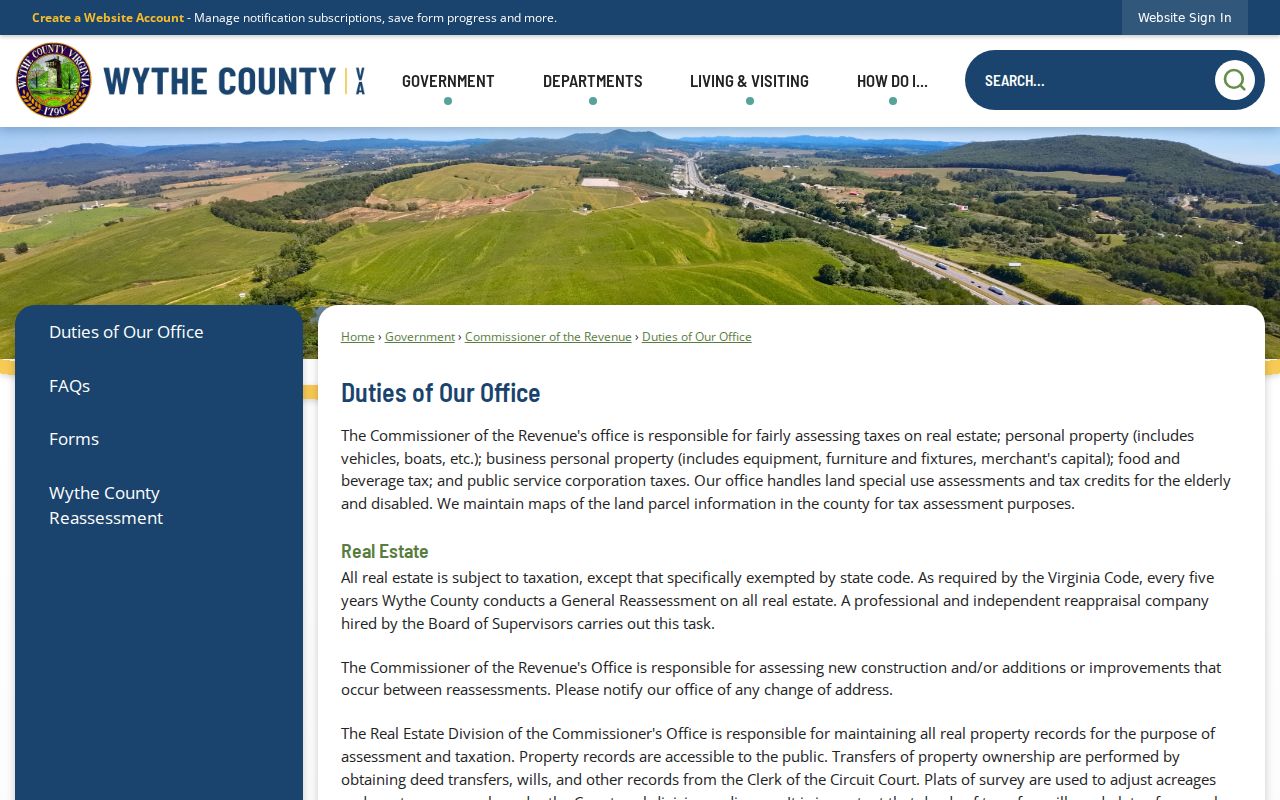
The Commissioner's duties page describes how the office maintains ownership transfers from deeds, wills, and other records filed with the Clerk. That duty anchors the county's real-estate records.
The card finds the deed; the deed proves ownership.
Wythe County January 1 Owner Lag
A January 1 checkpoint explains most mismatches between a deed and an assessment card. The county sends the tax ticket to the owner of record on that date. If a new owner and mailing address never reach the Commissioner before the cycle starts, the earlier name stays on the bill. The card may lag for that reason alone. Compare the deed's recording date with the card's own print or assessment date. The gap usually makes sense.
Wythe County publishes no fixed update interval for the roll. A newer recorded deed can name the buyer while the card still shows the seller. That is a timing rule, not an error. Never promise a set number of days for a change to appear. Note: Wythe County does not publish a daily or monthly refresh schedule for owner changes.
After a recent sale, pull the newest recorded deed first. Then ask the Commissioner whether the assessment card has been refreshed to match it. If a tax bill is in play, the Treasurer's account may still sit under the old account number and mailing setup. None of this changes the deed's recording date. The party named on the recorded instrument remains the owner of record in the deed records.
Where Wythe County Shows Ownership
Confirmation works best when fields agree. Check the card's tax map and owner against the newest deed's grantee and legal description, then the Commissioner's transfer update. A disagreement calls for a date check, not a snap conclusion. A deed recorded yesterday may not reach the card. An older card entry may only point to a prior transaction.
Names can differ across Wythe County property records. An update may be pending, or an entity may hold title. The land card gives an assessment owner. The deed index records a grantee, and a probate or fiduciary deed can show an estate transfer. Always read the dates and property description too.
| Source | Owner Info It Gives | Access |
|---|---|---|
| Commissioner land card | Current assessment owner and mailing details | InteractiveGIS or office |
| Circuit Clerk index | Recorded grantee and grantor | Index where enabled; images by clerk terms |
| Probate or fiduciary record | Executor, administrator, or estate transfer | Clerk file and recorded deed |
| Virginia SCC CIS | Public business entity filing data | State entity search |
The owner of record may not live there. A mailing address can belong to a trustee, attorney, relative, bank, or former address holder. Never use a land card to guess occupants.
Wythe County Entity and Estate Owners
Not every Wythe County parcel has one human owner. A land card may instead name a corporation, an LLC, a trust, an estate, or several joint owners. Search the exact legal name as written. Punctuation matters. So does trustee and "Estate of" language. The Virginia SCC Clerk's Information System returns an entity's name, status, registered agent, principal office, and filing history, yet it cannot name every beneficiary or settle who controls the parcel.
Cross-checking keeps an entity answer honest. Compare the name on the deed with the land-card text and the Secretary of the Commonwealth's entity filing. A registered agent serves the company. That entry is a service contact, not proof of ownership or control over the Wythe County land. Trust beneficiaries often stay private. Keep the parcel proof in the recorded instrument itself, not in an online directory's guess at a beneficial owner.
Estate ownership follows its own trail. When the owner line names a fiduciary, search the Clerk's probate and land indexes separately. A will states the decedent's wishes. The record that actually moves a real-property interest is usually an executor or commissioner deed, a distribution order, or a later deed. Wills and probate files sit with the Circuit Court Clerk, and vital records follow state access rules. A death certificate alone never conveys land.
Details decide whether an estate transfer is complete. Match the fiduciary deed to the legal description and map. Compare names across the estate file too. A probate case may cover personal property or several parcels. The deed book comparison closes the gap. Then the estate record counts as a completed transfer of the parcel.
Wythe County Mailing and Situs Names
A solid owner answer begins with two questions. Which name does the tax record carry? Which person or entity took the most recent recorded interest in the Wythe County parcel? Use the tax map to match the card to the land, then read the grantor and grantee in the deed against the legal description. Names that disagree call for a closer look. Compare the recording date with the card date, and ask the Commissioner whether a transfer is still in process.
Wytheville is the county seat and an incorporated town. Even so, a Wytheville postal address can fall outside the town boundary. The same goes for Rural Retreat. A mailing city never proves a tract sits inside the incorporated town. Check the parcel map and tax district instead. Those details tell you which office holds the relevant permit or zoning record.
The situs address points to the property itself. The mailing address tells the tax office where to send the tax bill. Those two fields can differ on the same card. One sample land card shows a Rural Retreat mailing-style address and Sharons Drive frontage, while its property-location field reads unassigned. It also lists a road district and tax map. That pattern argues for searching by frontage or map number whenever an address search returns nothing.
An unassigned location field shows why a lookup should carry several identifiers. Mailing community, road frontage, tax district, acreage, and map number can narrow a search together when no full street address exists. The county publishes no guaranteed update schedule. A postal name is not a parcel check. If a record seems tied to the wrong tract, ask the custodian for a correction. Bring the exact address and map details.
Limits of a Wythe County Owner Search
Owner records are public land and tax information, not a roster of who lives where. State address-confidentiality protections apply. Voter, motor-vehicle, court, and vital records follow separate access rules. A public assessment field should never be combined with unrelated sources to guess a protected person's private location. When an entry looks outdated, ask the custodian about the correction process rather than contacting a person at an inferred address.
A record shows only what a custodian recorded. An assessment card cannot confirm residency. It cannot prove an LLC's registered agent owns the land. Nor does it guarantee no later deed is pending. Virginia's Address Confidentiality Program can shield an eligible participant's true address. Voter and DMV files carry separate access limits.
Lawful use. Use the owner record for property diligence, tax questions, estate work, or house history. Do not use a mailing address or owner name to stalk, harass, or harm anyone.